1000+
Scientific Papers
User publications and validations
500+
Labs
using Qualisys for Life Sciences
25+
Clinically cleared countries
backed by ISO, FDA, EU MDR for the QCS product


Motion capture transforms how clinicians diagnose movement disorders, how coaches optimize athletic performance, and how life science researchers advance scientific discovery.
Qualisys provides high-precision motion capture for life sciences, serving both clinical and research environments to turn complex human movement into actionable insight at every level.
Why Choose Qualisys for Motion Capture?
-

A system that adapts to you
Qualisys adapts to your methodology — not the other way around. Outdoors, underwater, inside an MRI. Our marker-based or markerless systems deliver flexible motion capture for life sciences wherever your work demands.
-
One software, one workflow
Motion capture, force plates, and EMG come together in one seamless end-to-end system – from data collection to analysis. One system, learned once.
-
Data you can trust
Built on 35+ years of experience, our life science mocap solutions are trusted by leading institutions worldwide. Easy to share, transparent to review, and robust enough to stand behind.


-
 Integrated Ecosystem
-
Student and Site Licenses
-
Workflow Automation
-
Medical Device Certification
-
Plug-and-Play Reporting Solutions
Markerless for Life Sciences
Markerless motion capture takes marker prep out of the session, which can be more practical when the participant is a child, a neurological patient, or an athlete you have fifteen minutes with. Qualisys offers three routes to it, all running on Miqus video cameras and the QTM calibration your lab already knows. Which one fits depends on how you work.
The newest addition to our markerless ecosystem, Prisma Pose, will be available on November 2, 2026.
Qualisys' Markerless Ecosystem
-

QTM powered by Prisma Pose
The Qualisys markerless engine, running inside QTM. Markers, markerless skeletons, force plates, and EMG in one measurement file.
-

QTM powered by Theia
Calibrate and capture in QTM using Miqus Hybrid and Miqus Video cameras, with Theia software tracking and post-processing the data.
-

OnTraq powered by Prisma Pose
End-to-end markerless analysis built for athlete baseline testing, where decisions have to be quick and shared across staff.
Customer Stories in Life Science Applications
-
Centre des Massues, Lyon, France The Right to Walk – Enhancing Lives with Qualisys Motion Capture TechnologyRead story
-
SportFabrik, Differdange, Netherlands Unlocking Athletic Potential – When Decimals MatterRead story
-
RMIT, Melbourne, Australia Biomechanics Meets Aviation: A Nature-Inspired Leap in UAV DevelopmentReady story

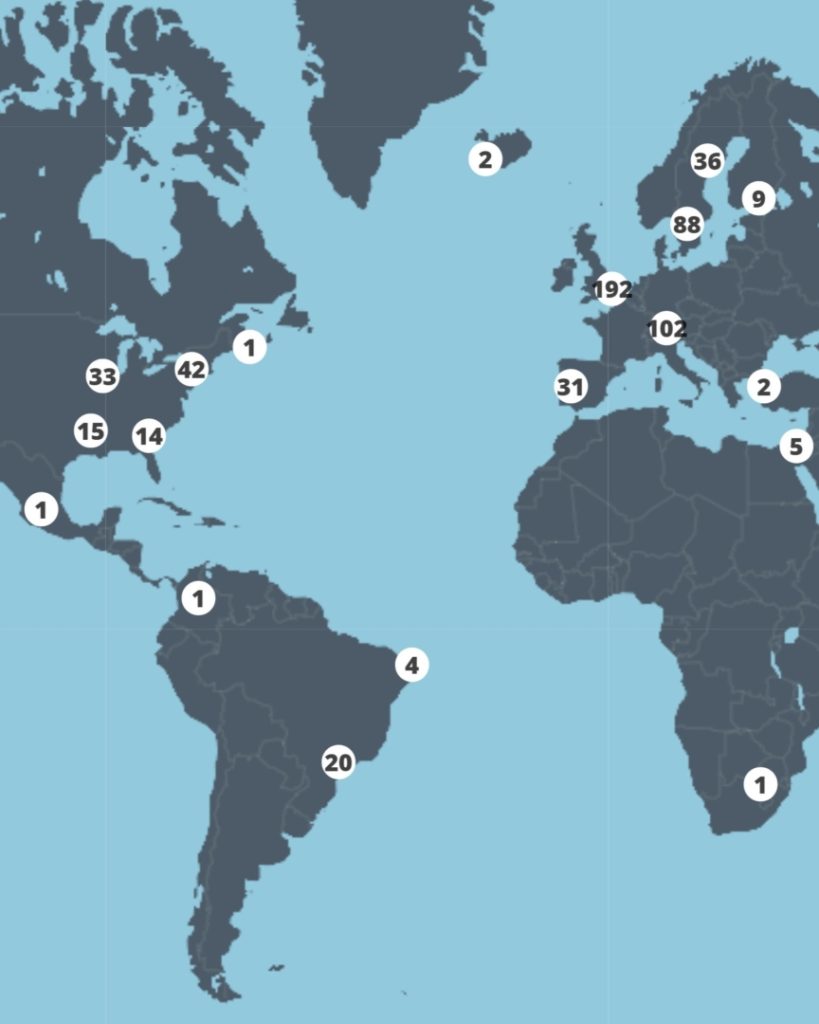


References


Frequently Asked Questions
Optical motion capture tracks the 3D position of markers placed on anatomical landmarks at a known sample rate inside a calibrated volume. Those trajectories are run through biomechanical modelling and processing to deliver kinematic and kinetic measures that observation alone cannot give you, including joint angles, such as knee flexion, shoulder rotation, and hip abductions, as well as joint kinetics, such as knee joint power, hip extensor moment. From a clinical perspective, these measurements support diagnosis, surgical planning, orthotic and prosthetic prescription, and objective rehabilitation and return-to-play decisions.
Yes, at least 8 Qualisys Video cameras combined with Qualisys marker-based cameras performs what we call True Hybrid: simultaneous markerless and marker-based tracking within the same measurement. Track prosthetics, athletic equipment, and other objects with markers while capturing human biomechanics markerless.
Both paths exist for markerless, Prisma Pose is Qualisys’ native markerless engine for biomechanical analysis that can run inside QTM. It reaches availability in November 2026. For labs that use the Theia3D Markerless software, Qualisys provides a trusted and seamless integration. Alternatively, OnTraq is our end-to-end markerless analysis solution built for athlete baseline testing of elite sports teams, powered by the Prisma Pose markerless engine.
Yes, depending on the manufacturer. QTM automatically synchronizes motion, force plate, EMG, eye tracking, IMU, and instrumented treadmill data from a variety of providers. Data acquisition for those integrated devices is performed directly in QTM, so you don’t need to jump from one application to another. You can find all supported device integrations by visiting qualisys.com/integration.
Qualisys exports to C3D, TSV, STO, TRC, FBX, and JSON and MAT formats for further analysis in applications such as Visual3D, OpenSim, AnyBody, Python, MATLAB, or your preferred animation or game engines.
Yes, Qualisys has supported outdoor capture since 2005 and underwater capture since 2010, and Arqus MRI enables motion tracking inside an MR environment. This matters to researchers and practitioners so they can measure more closely to real-world experiences of their subjects. Each environment brings its own constraints, and those constraints should not limit the research possibilities.
The Qualisys Clinical System (QCS) is a medical device with European Class 1m CE marking and has been cleared by the FDA for clinical use in the US, so it can be used in direct patient care as well as research.
Yes, applications of motion capture for animal biomechanics span from small-animal and rodent locomotion to full-body quadruped research and equine lameness studies. Comparative biomechanics studies across species have been performed on swarms of insects and on birds in flight.
Qualisys systems include an industry-unique site license, allowing customer sites to freely deploy QTM on as many computers as you like so your research is not tied to a dongle or single-seat licensing. Qualisys also offers student account, or “guest accounts,” to meet the needs of academic institutions that have a new set of users every semester or term.
Biomechanics labs commonly run 8 to 12 cameras, but the right number is set by capture volume, subject-count, marker set application, and complexity of the movements. A full-body marker set with a multi-segment foot model needs more coverage than a lower-body set. A golf swing is a multi-planar movement, which requires more coverage to track the entire motion, especially given occlusion that movement produces. For markerless capture, a minimum of 8 cameras is required to track full-body movement. Qualisys representatives will help you configure an optimal setup based on your needs. Use the link below to get in touch.
Explore Motion Capture for Life Sciences
Get in touch with a Qualisys representative, to learn more about our motion capture solutions for life sciences.