What is Motion Capture (Mocap)?
How Does Motion Capture Work?
Every motion capture system does the same basic job: track specific points on a person, animal, or object, then reconstruct those as a 3D skeleton, rigid body, or set of trajectories that move exactly like the original subject or object. That data can be recorded for later analysis or streamed live in real-time.
How that tracking happens depends on the type of system. There are three primary motion capture methods, and a related group of 3D position tracking technologies that answer the same question at a different scale and accuracy.
Motion Capture across Industries
1. Optical Motion Capture (Marker-Based)
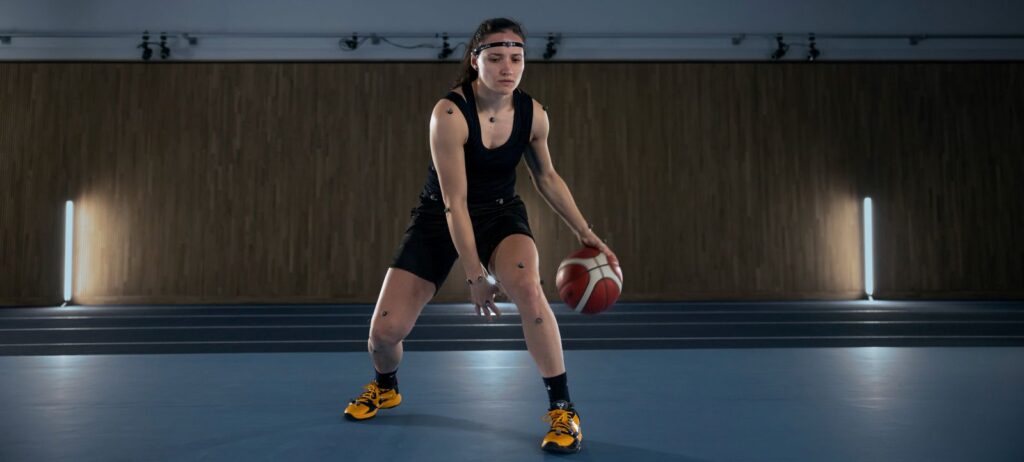
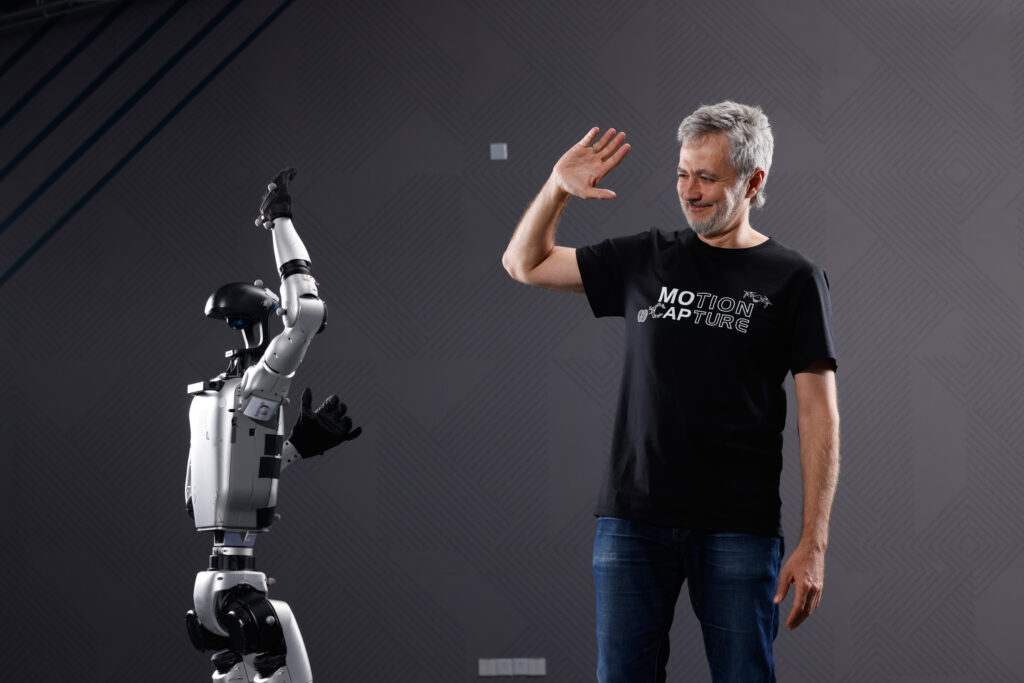
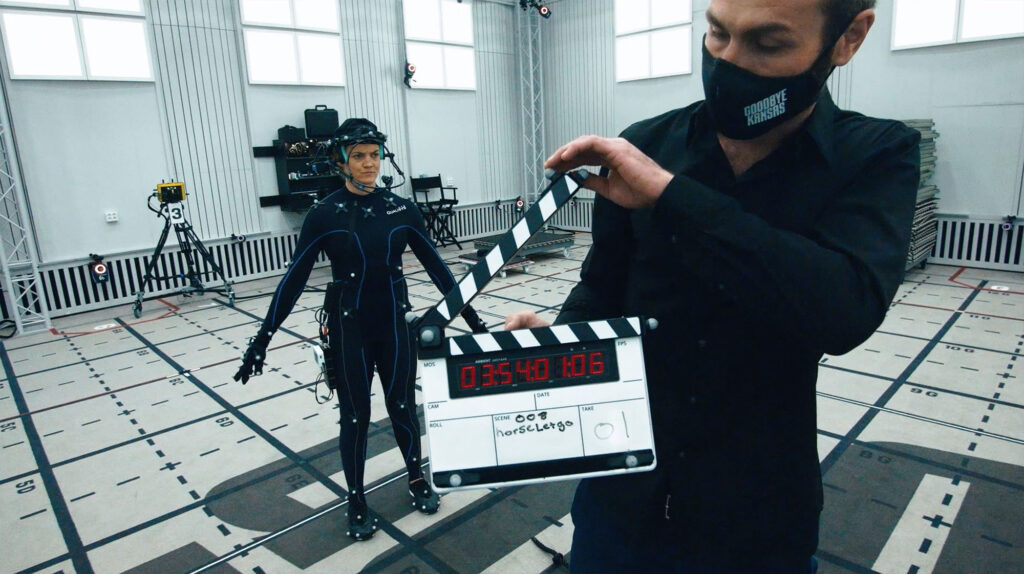
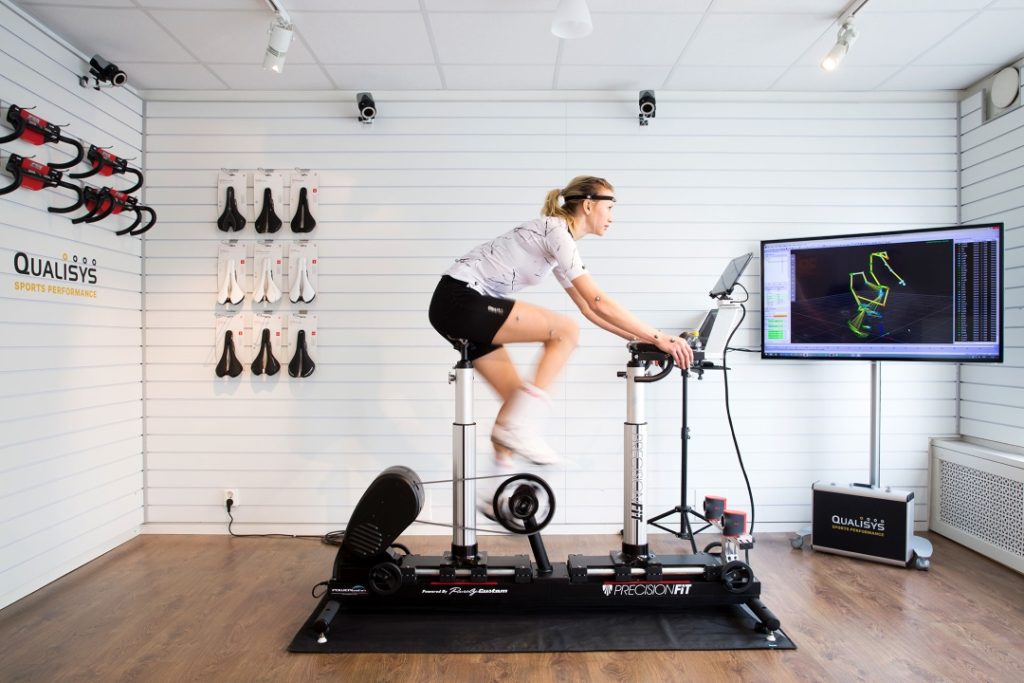
Optical mocap is the most accurate and widely used method for professional applications. Small markers are placed on a subject’s key anatomical points, joints, limbs, spine, or arranged on an object such as a drone, vehicle, ship model, or camera. A ring of specialized motion capture cameras tracks the exact 3D position of every marker many times per second, and software triangulates that data into a digital skeleton, a set of 3D trajectories, or a rigid body reported with six degrees of freedom.
Markers come in two forms. Passive markers are retro-reflective and bounce infrared light back to the cameras. Active markers are LEDs that emit their own light with a unique identity per marker, which is what makes tracking a swarm of vehicles or working at long range possible without markers being confused for one another.
This is the technology behind most scientific research, clinical gait labs, robotics testing, and high-end film and game production, anywhere sub-millimeter accuracy is needed. It requires a calibrated camera setup often within lab environments. Qualisys cameras carry IP67 protected housings, with IP68 versions for underwater work, as well.
2. Markerless Motion Capture
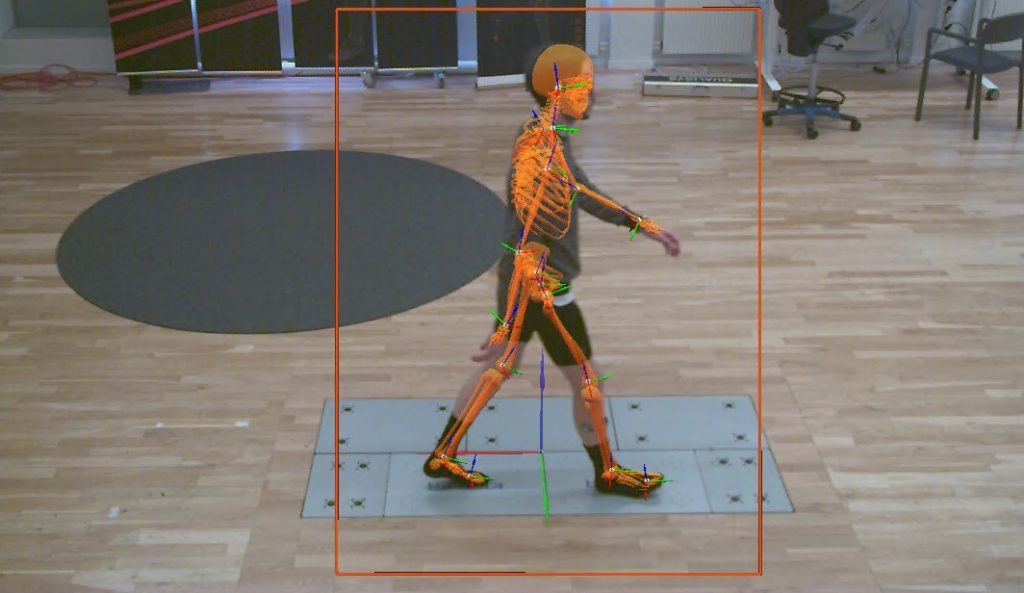
Markerless systems use computer vision and machine learning to estimate a skeleton directly from standard video, with no markers or suit needed. It’s the fastest way to get a result, and quality has improved dramatically, however there is still a noticeable gap in accuracy compared to marker-based systems, especially for fast movement, fine detail (like fingers), or scientific-grade measurement.
The two methods are increasingly used together, with marker-based capture serving as the reference that markerless results are validated against.
3. Inertial Motion Capture (Suit-Based)
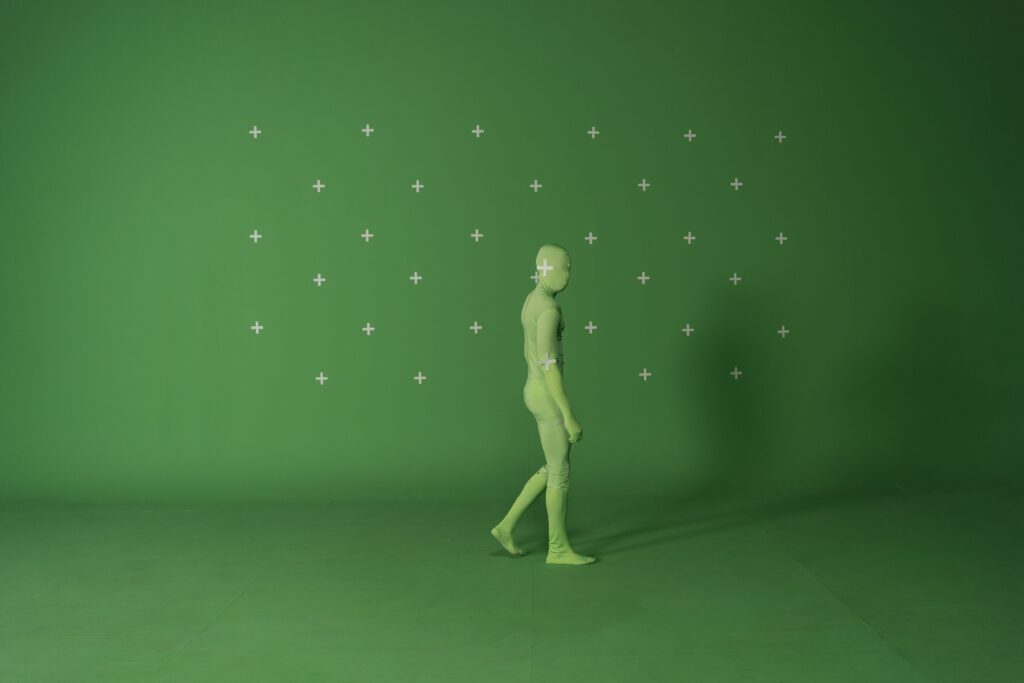
Inertial systems skip cameras entirely. Instead, the subject wears a suit fitted with small sensors (IMUs, accelerometers and gyroscopes) that measure rotation and acceleration at each body segment. This data streams wirelessly to software that reconstructs the movement.
Inertial suits are portable and fast to set up, which makes them popular for on-location capture and field work. The trade-off is that IMUs measure how segments move relative to each other, not where they are in space. A sensor suit can tell you how a knee is bent, but not where in the room the person is standing. Global position is estimated from that relative motion, so it drifts with no fixed reference to correct it.
Optical vs. Inertial vs. Markerless: Which Is Best?
| Optical (marker-based) | Inertial (suit-based) | Markerless | |
|---|---|---|---|
| Accuracy | Highest – sub-millimeter on position and below 0.1 degree on rotation. See ASTM-based assessment results here | Good, but drifts over time. Relative motion, not absolute position. | Improving, but lower than optical |
| Setup | Calibrated camera Calibrated multi-camera volume | Fast, wearable | One or more video cameras, no marker prep |
| Best for | Science, biomechanics, Science-based methodology, certification, ground truth validation, and high-end production work | On-location capture, quick iteration | Patient comfort, high-throughput screening, previsualization |
| Environment | Indoor, outdoor, and even underwater (with the right cameras) | Anywhere | Constrained by lighting and camera placement |
There’s no single “best” system – the right choice depends on how much accuracy your application needs. A game studio animating a background character has very different requirements than a biomechanics lab measuring a patient’s knee joint to the millimeter, or an engineering team validating how a drone responds to wind.
This is exactly where Qualisys specializes: optical motion capture built for situations where accuracy, reliability, and repeatability aren’t optional.
A Short History of Motion Capture
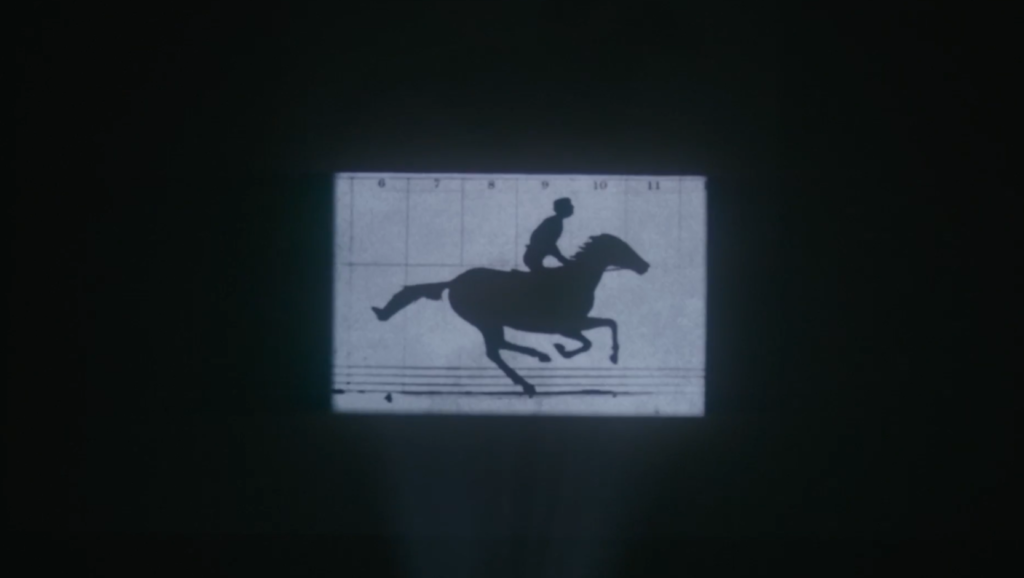
Motion capture started with scientists trying to answer questions about how bodies move, and it has been a working instrument in medical and biomechanics research for more than 40 years. It arrived in entertainment roughly a century after the first locomotion studies. Today the same measurement is as likely to be found in a hospital gait lab, a towing tank, a wind tunnel, or an underwater robotics facility as on a film set. What changes is how much accuracy the question requires.
Frequently Asked Questions
“Mocap” is simply shorthand for “motion capture” – the process of recording real-world movement as digital data.
Motion capture is widely used in games, films, healthcare (gait and movement analysis), sports science, biomechanics research, robotics, automotive and aerospace testing, and structural engineering.
It depends entirely on the system. Markerless and inertial systems typically offer good but limited accuracy. High-end optical marker-based systems, like those used in scientific research and engineering, can achieve sub-millimeter 3D accuracy – precise enough to serve as a “ground truth” reference for validating other measurement systems.
Yes, with the right hardware. While early motion capture required a fully controlled indoor studio, modern optical systems can operate outdoors and even underwater, which has opened up entirely new engineering and research applications, from marine robotics to structural testing. Qualisys has supported outdoor motion capture since 2005 and underwater motion capture since 2010, with IP67-rated outdoor housings and IP68-rated underwater camera systems designed for demanding field environments.
Physiotherapists, biomechanists, sports scientists, veterinarians or equine specialists, neuroscientists, marine engineers, roboticists, automotive and aerospace engineers, and structural engineers all rely on motion capture as a measurement tool – not just a visual/animation one.
Want to know more?
Get in touch with a Qualisys representative to learn more about our motion capture solutions for life sciences, engineering and entertainment.