-
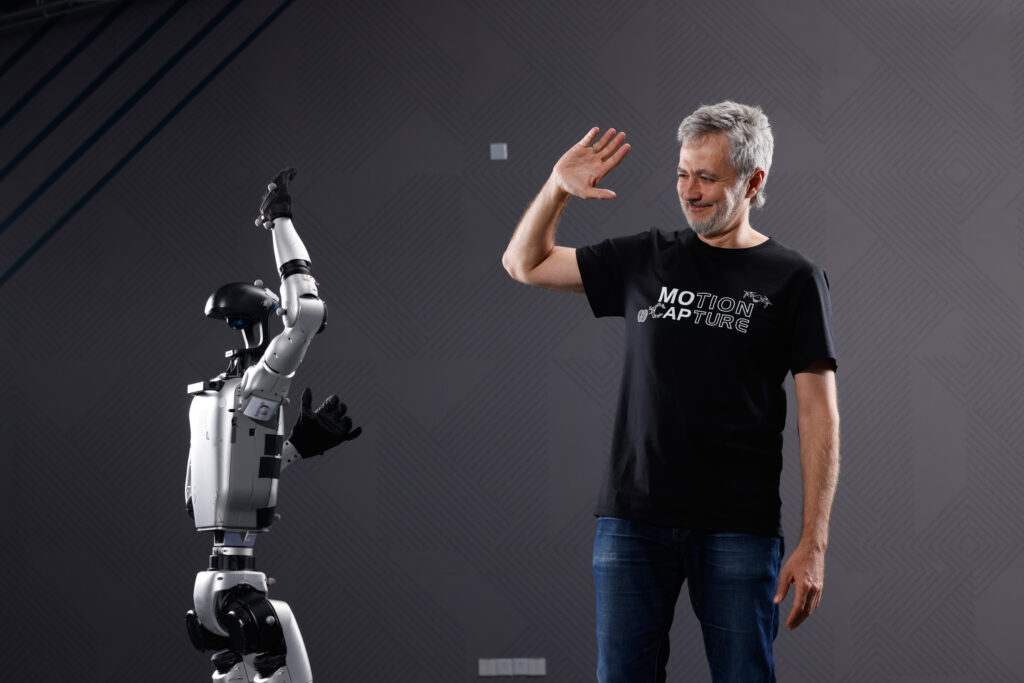
 Robotics & UAV
-
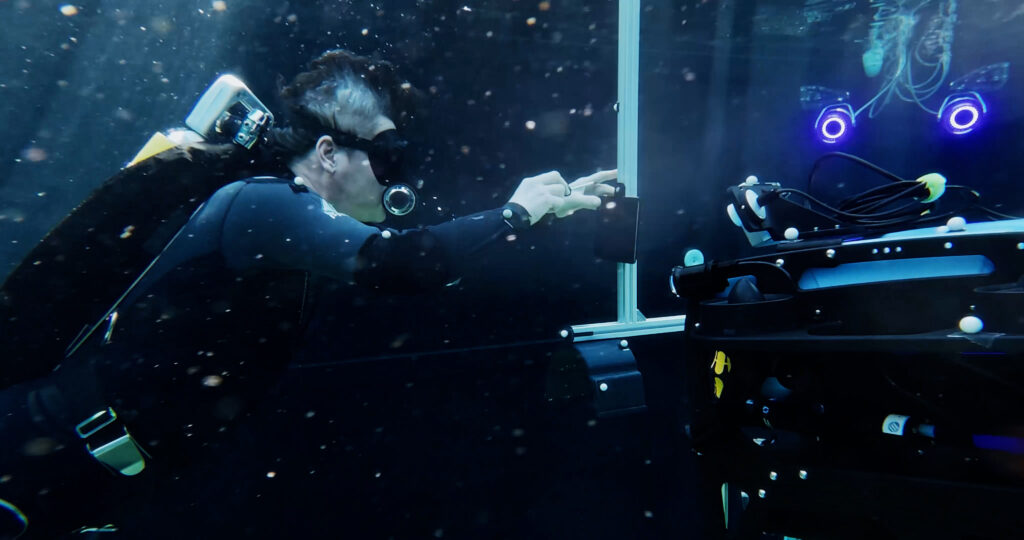
 Marine Tracking
-
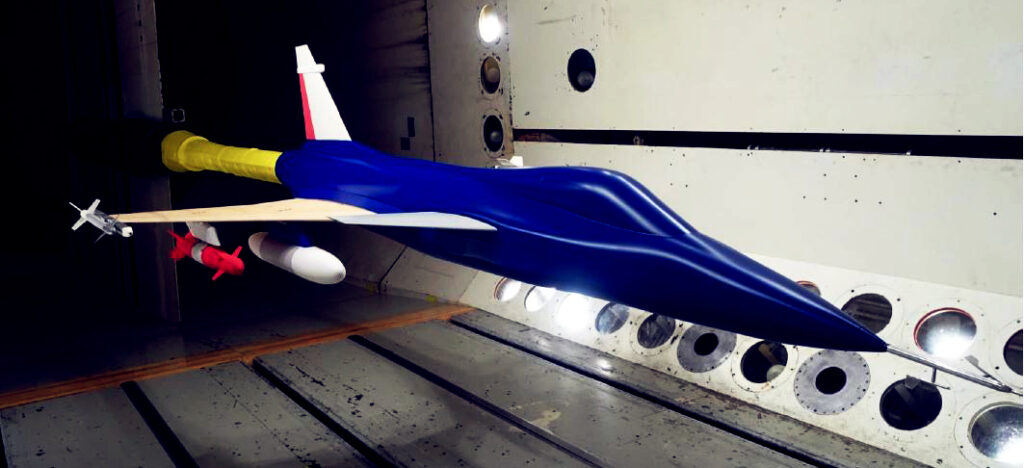
 Automotive & Aerospace
-
 Structural & Industrial Systems
Engineering teams need motion capture that is accurate, flexible, and easy to integrate.
Qualisys delivers sub-millimeter precision, open architecture, and scalable tracking solutions for any environment.
Why Choose Qualisys for Motion Capture?
-

Open Architecture
Our systems work with the tools you already use. Full API and SDK access with native ROS, Python, and C++ support with no vendor lock-in.
-
Environment Versatility
Scale from one object to many; from indoor to outdoor and underwater. Your workflow stays consistent wherever your research takes place.
-
Validate with Confidence
Sub-millimeter 3D accuracy and sub-0.1° 6DOF orientation, the ground truth standard across every engineering application.
Motion Capture for Engineering
- Robotics & UAV Scale up without sacrificing fidelity.
- Marine Tracking Track above and below the surface at once.
- Automotive & Aerospace Test anywhere, from wind tunnel to track.
-
Structural & industrial systems Validate and calibrate with confidence.

-
 IP67 and IP68 cameras
-
Native ROS Integration
-
Active and Passive Marker support
-
Multi-Agent Tracking
-
Sub-10ms latency
10+
Years
in underwater tracking, dating back to 2010
50m+
Tracking Range
Tested with 19mm passive markers
0.168mm
RMS Error
Full results available in published ASTM assessment


References











Frequently Asked Questions
Ground truth is a reference measurement with uncertainty small enough to treat as exact while you characterize the error of something else, such as a Simultaneous Localization and Mapping (SLAM) pipeline, a state estimator, a control law, or a simulation model.
In practice, achievable accuracy depends on volume size, camera count and placement, marker size, and calibration quality. When assessed according to ASTM E3064-16, Arqus cameras measured 0.168 mm RMS error, with sub-0.1° 6DOF orientation and range beyond 50 m using 19 mm passive markers.
RTK-GNSS, LiDAR, UWB, and IMU systems excel in outdoor, long-range, or self-contained environments, however they cannot match the precision and spatial resolution required for certain applications within engineering and come with limitations.
RTK-GNSS is centimeter class, unavailable indoors and underwater, and gives no orientation without a second antenna. Ultra-Wideband (UWB) is decimeter class – typically 15 to 30 cm at 25 to 50 Hz, carries no orientation, and suffers multipath in metallic environments. LiDAR and SLAM accumulate drift with no absolute reference, so they cannot evaluate themselves. An IMU has no external reference either – it measures specific force and angular rate at the sensor, so position and heading come from integration and drift with time.
In most engineering programs, optical motion capture is complementary to these methods and is used to characterize the performance of the sensor or method you are deploying.
Qualisys offers open-source real-time SDKs for C++, C#, and Python, native ROS resources, MATLAB and LabVIEW support. Data can be exported to C3D, TSV, MAT, and JSON for further work and analysis. The real-time server streams 2D, 3D, and 6DOF over TCP or UDP. For time synchronization across instruments, QTM supports hardware triggering, timecode, PTP and analog input.
Qualisys provides unique 6DOF identification for 100+ agents across the full volume, so a swarm test runs the same workflow as a single-robot test. The number alone means little. Passive marker configurations must be geometrically distinguishable, which limits count on small airframes; active markers are sequence-coded, which removes that ceiling and risk of identity swap.
Yes, and Qualisys has supported outdoor capture since 2005. Sunlight carries infrared wavelengths that compete with marker reflections, handled through in-software active filtering, optical sun filters, strong IR illumination, and IP67-rated housings against dust and water ingress. Daylight is not a solved problem, though – direct low-angle sun into a lens is difficult and wet surfaces produce reflections that look like markers, so camera placement and marker choice especially matter for outdoor setups.
Yes to both, Qualisys has supported underwater tracking since 2010, with IP68-rated housings and Arqus Underwater at 9 to 12 MP up to 300 Hz. Above-water and below-water systems can be merged into one calibrated volume in what we call a “Twin system” setup. The subject or object being tracked stays in a single coordinate system as it breaks the surface and goes from one volume to another. Crossing the water line itself can present some challenges; splashes create noise in the volume.
Arqus runs 5 to 26 MP at 150 to 1400 fps at full field of view, and Miqus runs 1 to 4 MP at 180 to 650 fps, so one product family covers structural deflection over minutes and a crash event over milliseconds. In a crash lab, high-speed video shows what happened, and motion capture adds calibrated 3D position and orientation in a shared coordinate frame, synchronized with supporting data channels. Wind tunnels present different challenges, where the target is usually model deformation rather than rigid body motion and limited window ports constrain where cameras can sit, so the configuration is worth working through with an application engineer as you plan your setup.
Camera count is set by volume dimensions, required accuracy, object count and size, and occlusion rather than a standard figure, though a small indoor robotics volume may work with 6 to 12. Arqus detects passive markers at up to 50 m with 19 mm markers, measured on an A12 with standard lens at maximum exposure. For large basins, fixed-camera calibration extends range beyond 100 m.
Qualisys has built optical measurement systems for more than 35 years, with systems in service ten years or more. The comparison worth running is not price per camera but total cost over the period you intend to run the system. Consider whether software support continues, whether the SDK stays open and documented, whether older cameras stay usable alongside new ones, whether recorded data is readable in a decade, and how fast support answers when the test is moments away.
Want to know more?
Get in touch with a Qualisys representative to learn more about our motion capture solutions for engineering.