How Railotech Proves an Icebreaker Can Survive the Arctic – Before It's Built
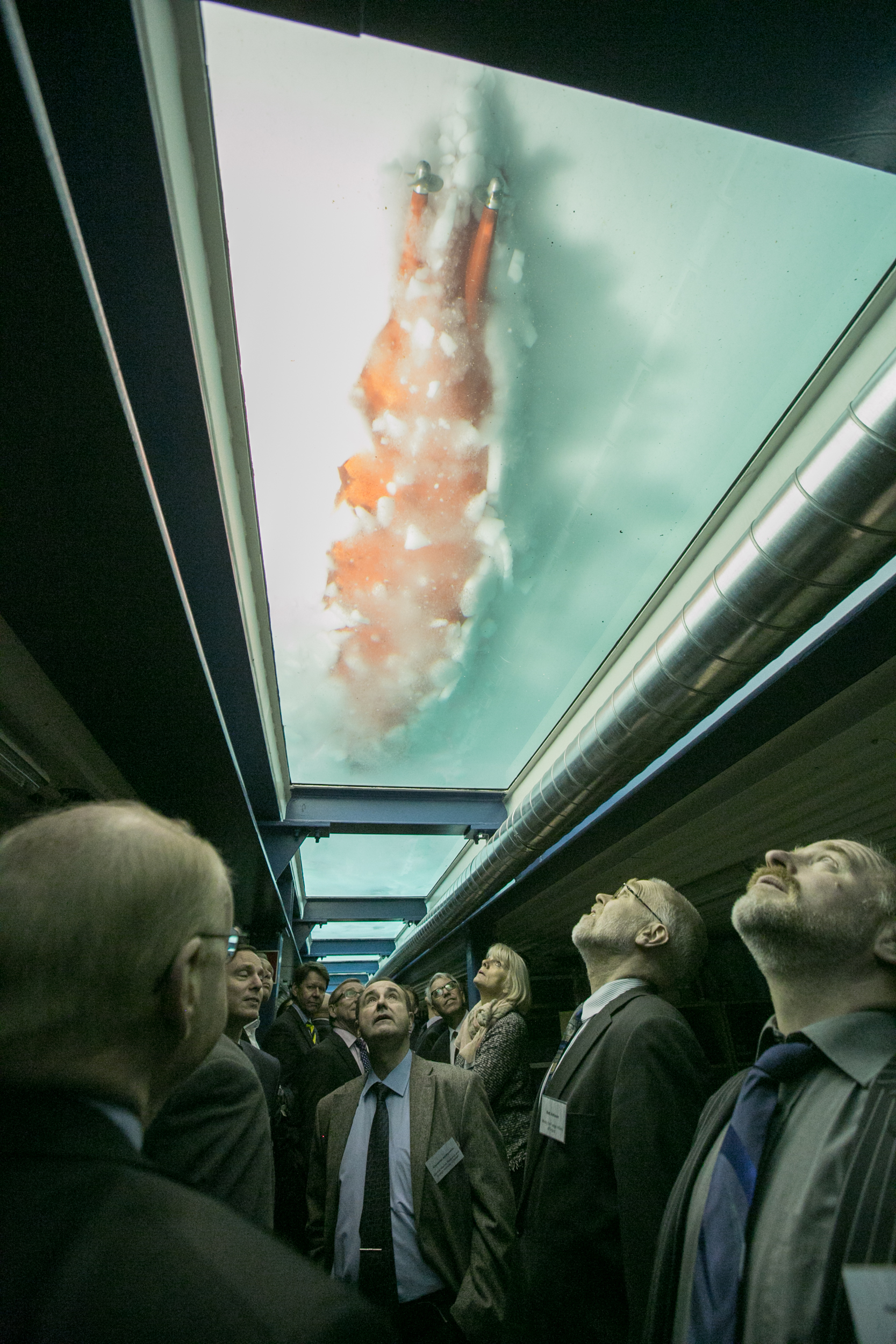
Minus 20°C. A basin full of ice. And a miniature ship that decides whether the real thing can survive the Arctic. It sounds like a scene from an action movie. For Railotech (previously known as Aker Arctic) in Helsinki, it’s just another day at the world’s only privately owned ice model testing facility.
Sixty percent of the world’s icebreakers
Railotech has designed 60% of the world’s icebreakers. Research vessels bound for the Arctic and Antarctic, cargo ships, offshore structures built for ice and cold – if it has to survive somewhere no one wants to get stuck, Railotech has probably been involved.
That track record didn’t come from guesswork. It came from a simple but demanding principle: know exactly how a ship will behave in ice before it’s built, not after.
The problem: you can’t test this on the real thing
Before a ship ever meets real ice, engineers need to know how it will behave. How much resistance does the ice build up against the hull? Can the structure handle the pressure? Where’s the limit for safe passage?Testing this on a full-scale ship in actual Arctic ice is neither safe nor practical. A miscalculation isn’t a footnote in a report – it’s a vessel stuck, damaged, or worse, in one of the most unforgiving environments on Earth.
So instead, Railotech brings the Arctic indoors. Engineers build miniature ship models and run them through ice in the company’s own basin, measuring everything, millimeter by millimeter, long before a single plate of steel is welded on the real vessel.
The hard part: measuring the unmeasurable
Here’s where it gets difficult. Ice is unpredictable by nature – that’s precisely why it needs to be tested. But that same unpredictability makes it a hostile environment for measurement. Light bounces unevenly off broken ice. Water splashes and obscures sightlines. Standard tracking equipment struggles to keep up.
And yet the engineers need exact data on how the model moves – its position, its rotation, its speed – in real time, while the ice itself is actively working against clean observation.
The solution: cameras that never lose sight of the model
Railotech uses Qualisys Oqus cameras to track the ship models’ movements through the ice with high precision, even in the demanding conditions of an ice basin. Where other systems lose the model behind spray, glare, or drifting ice fragments, the Oqus system holds on.
But the value doesn’t stop at observation. The camera system’s 6-DOF data – full motion tracked across six degrees of freedom – can be used to emulate real-time GPS and gyrocompass signals at model scale. A control computer reads these signals and automatically adjusts the model’s propulsion to achieve the desired behavior.
That capability is essential for tests like dynamic positioning, where a vessel has to hold its position in ice without being anchored – a scenario where even small errors in tracking would produce misleading results.
The result: decisions made before the drawing board closes
The outcome is data precise enough to inform decisions that determine how real ships will perform in some of the toughest waters on Earth – before they ever leave the drawing board.
For the engineers, shipbuilders, and operators relying on that data, it’s the difference between a vessel that’s designed for the Arctic on paper and one that’s actually proven to survive it.
Looking for more accurate marine test data?
Download our White Paper for free and explore how motion capture can provide ground truth for hydrodynamic testing, autonomous underwater vehicle (AUV) validation, and underwater tracking applications. Learn how leading marine engineers overcome measurement challenges and achieve reliable results both above and below the waterline.