About the Study
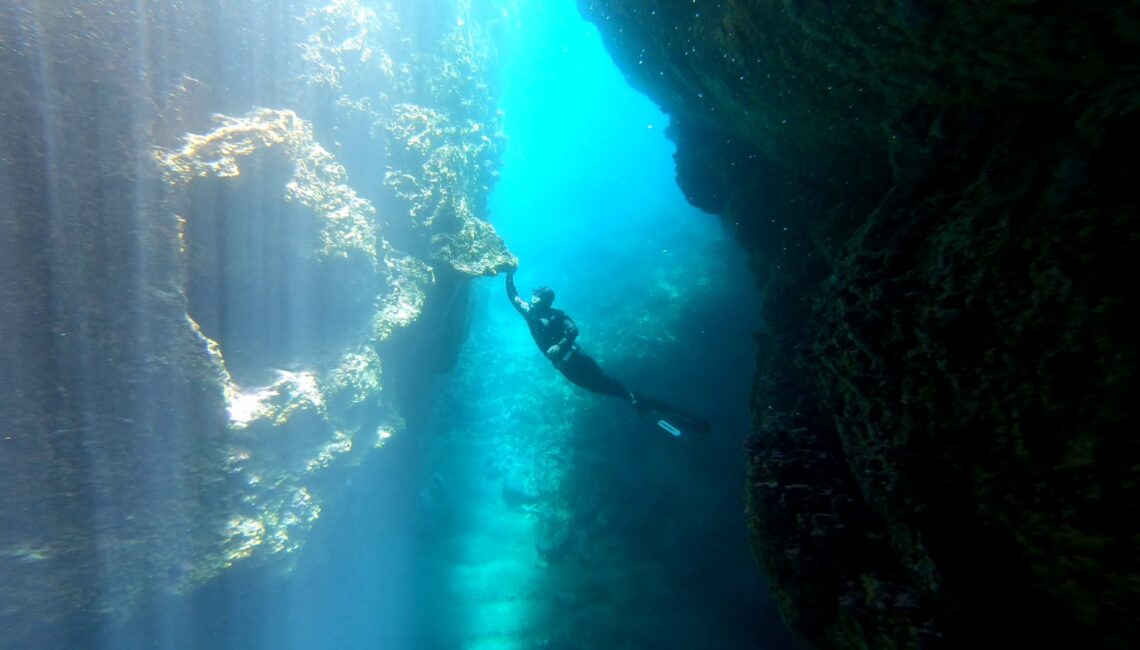
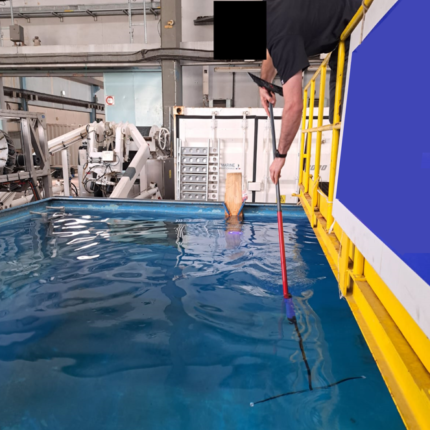
The study was carried out by Pauline Algourdin, Anthéa Serralheiro, Corentin Travouillon, Felix Lefevbre, Benjamin Ostre and Yoann Joliff, in collaboration with the MAPIEM Laboratory, Beuchat International, Marine Nationale and Trinoma. The team studied lower body kinematics during freediving, focusing on the flutter kick – a key movement that influences propulsion and efficiency in the water. To validate wearable inertial sensors in real-world conditions, they compared Cometa IMU data against high-precision optical motion capture measurements.
The results, published in Sensors and Actuators A: Physical, demonstrated that the system provides robust, high-fidelity joint measurements, giving researchers confidence when validating other technologies.
The Challenge
Collecting data underwater presents unique hurdles:
- Light refraction and bubbles affecting camera views
- Maintaining marker visibility and accuracy
- Rapid, multi-segment joint motion in a fluid medium
The team needed a solution capable of precise, reliable 3D joint kinematics during vertical flutter kicking – consistently and in a real aquatic environment.
The Solution
Using an underwater-ready optical motion capture system, the researchers:
- Captured precise hip, knee, and ankle angles
- Collected reference-standard kinematic data to validate wearable IMUs
- Ensured sub-millimeter accuracy despite challenging underwater conditions
“When we first considered optical motion capture for our underwater study, we weren’t sure how well it would handle the aquatic environment,” says Dr. Pauline Algourdin, Principal Investigator.
“With the system, we could capture precise segment kinematics underwater, enabling detailed analysis of hip, knee, and ankle motion. This gave us confidence in every aspect of our analysis and allowed us to validate wearable sensors with reliable, high-quality data.”
Results & Impact
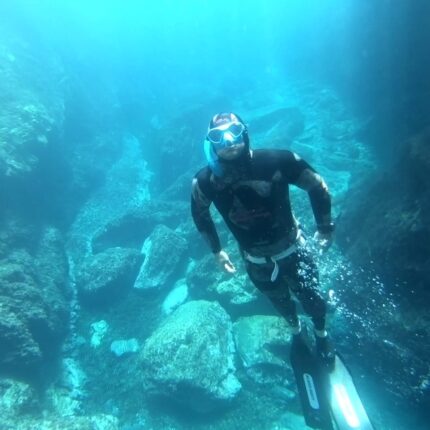
The system provided very high correlations with IMU data for sagittal plane motion – that is, movements that go forward and backward, such as bending and straightening – delivering consistent, precise measurements across the full range of motion. For the researchers, this meant reliable, actionable data – a foundation for improving athletic performance and reducing injury risk
When the technology operates smoothly, researchers can focus on discovery, explore new environments, push boundaries, and deepen their understanding of human motion – even underwater.
“Installing this system has transformed how our clients study movement in water. The accuracy and reliability are unmatched”, Felix Lefebvre Trinoma and distributor partner to Qualisys.
Why Qualisys
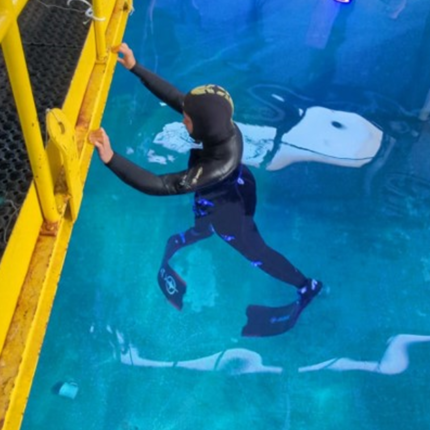
Our mission is to support researchers in pushing scientific boundaries. From underwater studies to clinical biomechanics and sports performance analysis, our systems deliver precision, consistency, and clarity – enabling discoveries that make a real impact.